
Poly Tanks vs Steel Tanks: Which Is Better?
Deciding between a poly (polyethylene) water tank and a steel tank isn’t just about price. It’s about how you’ll use the tank, the property layout, long‑term performance and maintenance. At Taztanks we often get asked, “Which one should I go for?”. So, here we break down the real differences, the pros, the cons, and help you choose the right tank for your situation.
What you need to know about Poly Tanks
Lightweight and easy to handle - Poly tanks are made from tough plastic. That means they’re lighter and easier to transport. For smaller properties, tight access points, or retrofit jobs where there isn't room for bulky gear, poly often wins.
Cost‑effective and simple - Generally, poly tanks cost less than steel tanks, both upfront and for installation. The savings come from simpler manufacturing and lighter delivery. For small‑to‑medium households or budget‑conscious buyers, poly can be very attractive.
Good for modest needs, but with limits - For gardens, laundry, toilet flushing, or smaller households, poly is usually more than adequate. But if you want large storage volumes, or live somewhere with extreme weather (heat, bushfire risk), poly can have limitations: UV exposure, expansion and contraction, and lifespan might be shorter compared to steel.
What you need to know about Steel Tanks
Built to last and for capacity - Steel tanks, such as our Heritage, Rhino, or Aquamate ranges, are engineered for durability and large‑volume storage. They’re ideal for rural properties, commercial use, or anyone wanting long-term water security.
Strength, weather resistance and long warranty - Steel resists UV, heat, impact, rodents, and has structural strength that handles large volumes of water. With a 20‑year pro‑rata warranty and optional custom finishes (like colour‑matched steel), you get both a functional and visually integrated tank.
Perfect for large households, rural properties or commercial use - If you’re harvesting rainwater for the whole house, supplying water for livestock or irrigation, or need storage for fire‑water compliance, steel is typically the safer, longer‑lasting option.
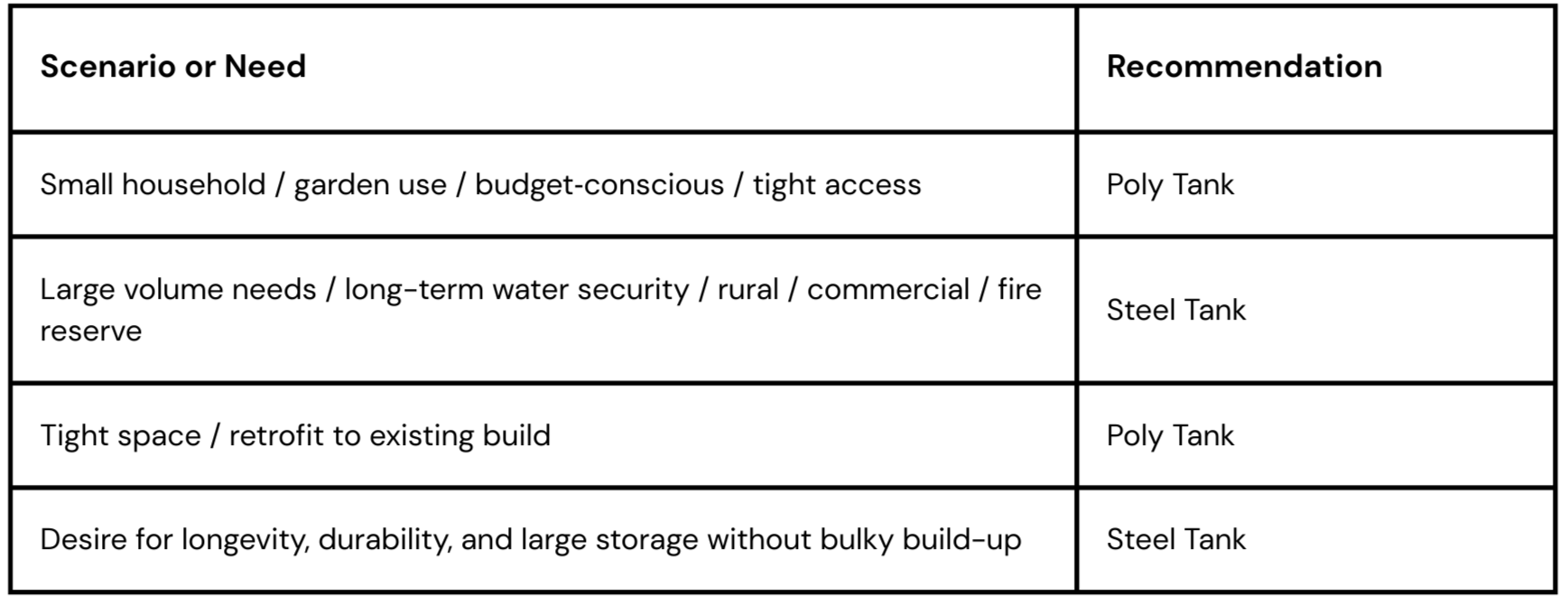
When Each Tank Type Makes Sense
Potential Trade-offs (And What to Watch Out For)
Poly tanks are Light but can degrade over many years with UV exposure. They may become brittle or discoloured and have shorter lifespans. On the other hand, steel tanks are heavier and often costlier to deliver and install. They may need a proper base, and installation often requires more planning (site prep, stable ground, access).
Our Take: It’s about matching tank type to your needs
There’s no one-size-fits-all. If you run a small household or want simple supplementary water for gardening, a poly tank is a smart, cost-effective solution. If you’re after longevity, high capacity, and water security over decades, especially on a country or rural property, a steel tank is worth investing in.
At Taztanks, we don’t push one over the other: we assess your situation, talk through your water needs and access constraints, and provide tailored advice.
Choosing a water tank isn’t a decision to take lightly. Pick based on practical requirements, longevity, and what you’re trying to achieve with rainwater harvesting. Want some guidance based on your property? Reach out, we’re happy to help you weigh the options.